
Any DJ can slam peak-time bangers for an hour at 2:00 AM. The true mark of a seasoned professional DJ is the ability to command a 4-hour residency slot: taking an empty room with ten people standing near the bar, establishing a hypnotic sonic foundation, and gradually building dynamic dancefloor energy until the room is packed and primed for the headliner.
Executing a masterclass warm-up set requires sophisticated crate curation. You cannot rely on Top 10 chart hits. You need deep cuts, atmospheric B-sides, hypnotic rolling basslines, and extended dub edits that draw listeners into the room without burning out the sound system.
In this resident DJ guide, we break down the 4-hour set progression formula, explain harmonic energy climbing with the Camelot wheel, and show how to source extended underground club dubs in lossless 24-bit FLAC using beatport-downloader.com.
1. The 4-Hour Residency Progression Curve
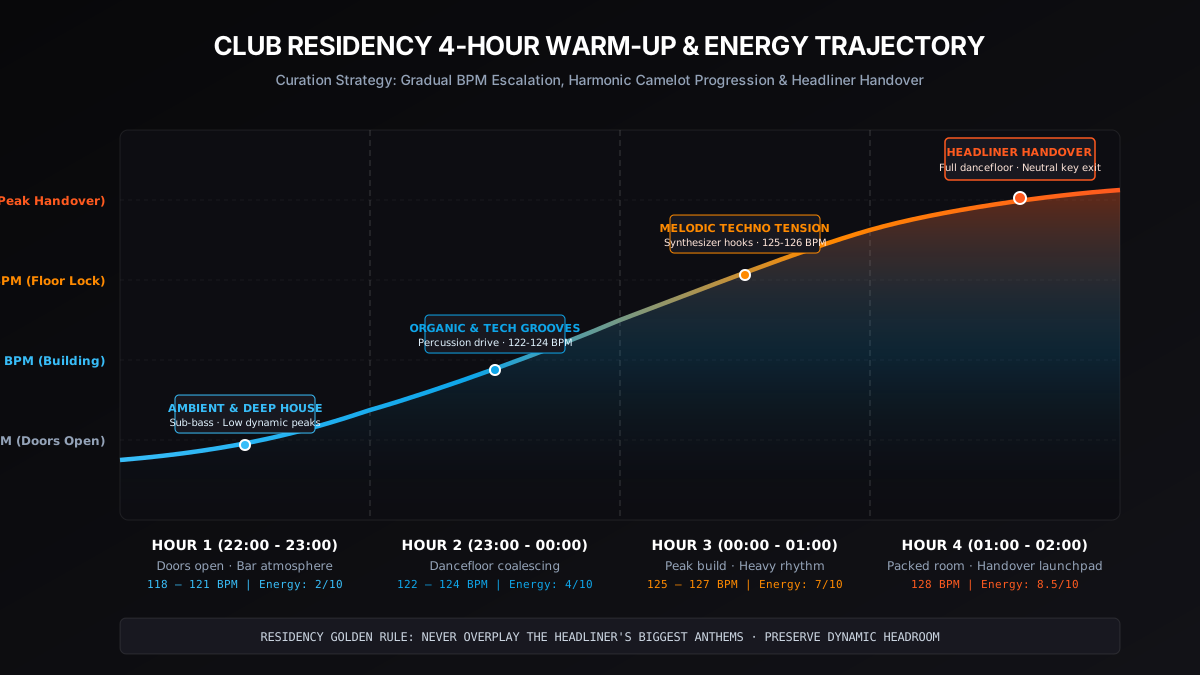
4-Hour Club Residency Energy Curve:
   100% ───────────────────────────────────────────────────────────── [Headliner Takes Over]
                                                          ▲ (Peak Transition)
    75% ───────────────────────────────────────────┌──────┴──────┐
                                                   │ Hour 3:     │
    50% ────────────────────────────┌──────────────┤ 126-128 BPM │
                                    │ Hour 2:      │ Building    │
    25% ─────────────┌──────────────┤ 123-125 BPM  │ Driving     │
                     │ Hour 1:      │ Deep House / │ Melodic     │
     0% ─────────────┴──────────────┴──────────────┴─────────────┘
                     120-122 BPM (Hypnotic, Organic, Dubs)
Hour 1 (10:00 PM to 11:00 PM): Setting the Room Atmosphere
Focus on organic percussion, rolling sub-bass, and low-tempo grooves (120 to 122 BPM). Keep highs smooth and unobtrusive so patrons can socialize and buy drinks.
Hour 2 (11:00 PM to 12:00 AM): Establishing the Dancefloor Rhythm
Introduce more pronounced kick transients and rhythmic chord stabs (123 to 125 BPM). The first dancers will step onto the floor. Keep transitions long and harmonic.
Hour 3 (12:00 AM to 1:00 AM): Building Tension & Drive
Move into driving basslines and melodic hooks (126 to 128 BPM). The room should be reaching 80% capacity. Use energy-boosting Camelot wheel transitions (+1 or +2 key steps).
Hour 4 (1:00 AM to 2:00 AM): Peak Warm-Up & Headliner Handover
Lock in a steady peak groove that matches the headliner's starting tempo and musical aesthetic without playing their signature tracks.
2. Sourcing Extended Underground Dubs and Deep Cuts
Finding the best warm-up tracks requires digging beyond the front-page Top 10. Underground electronic labels release specialized Dub Mixes, Instrumental Edits, and Ambient Tool Cuts that never appear on radio or commercial streaming playlists.
Using beatport-downloader.com, you can browse label discographies (such as Innervisions, Life and Death, Anjunadeep, and Diynamic), batch download complete 4-track EP releases in 24-bit FLAC, and build deep, distinct crates that other local DJs do not possess.
3. Harmonic Energy Climbing on the Camelot Wheel
During a long residency set, you can control the physiological energy of the crowd by orchestrating deliberate key shifts:
- ✦Same Key (e.g., 8A to 8A): Creates a hypnotic, trance-like state that keeps the crowd locked in a groove.
- ✦Energy Boost (+1 Step, e.g., 8A to 9A): Subtly increases musical tension and excitement without jarring the crowd.
- ✦Dramatic Lift (+2 Steps, e.g., 8A to 10A): Delivers an obvious emotional lift, perfect for introducing a peak-time breakdown.
Master the Art of the Club Residency
Equip yourself with the tools, tracks, and audio fidelity needed to master long club sets.
Start Building Your Resident DJ Library on Beatport Downloader PRO